Choosing the best FiberCELL Metal Laser Cutter starts with the work it must perform, not the largest power rating on a brochure. A compact cell may suit frequent part changes and limited floor space. A higher-capacity configuration may better support thicker sheets, longer shifts, or larger production batches. The right choice depends on material, part geometry, tolerance, throughput, and available operators. Small details matter. A nested sheet, a stack of finished parts, and a nozzle change can reveal more than a polished demonstration.
Laser-cutting researcher and author Dr. John Powell’s work offers a useful principle, paraphrased here: cutting quality depends on the interaction between the beam, material, and process settings. That is a practical lens for comparing FiberCELL options. Ask for sample cuts in your own materials, and inspect edge quality, repeatability, and piercing behavior. Check how loading, unloading, extraction, maintenance access, and operator training fit your actual shop. A fast cut is not always a productive shift. Neither is a sophisticated cell automatically the best investment. Some buyers overvalue headline speed; others underestimate setup time. Those are easy mistakes to make. This guide compares the factors that shape a sound decision, while recognizing that no single specification can predict every shop’s results. The final choice should be supported by a realistic production trial and clear operating requirements.
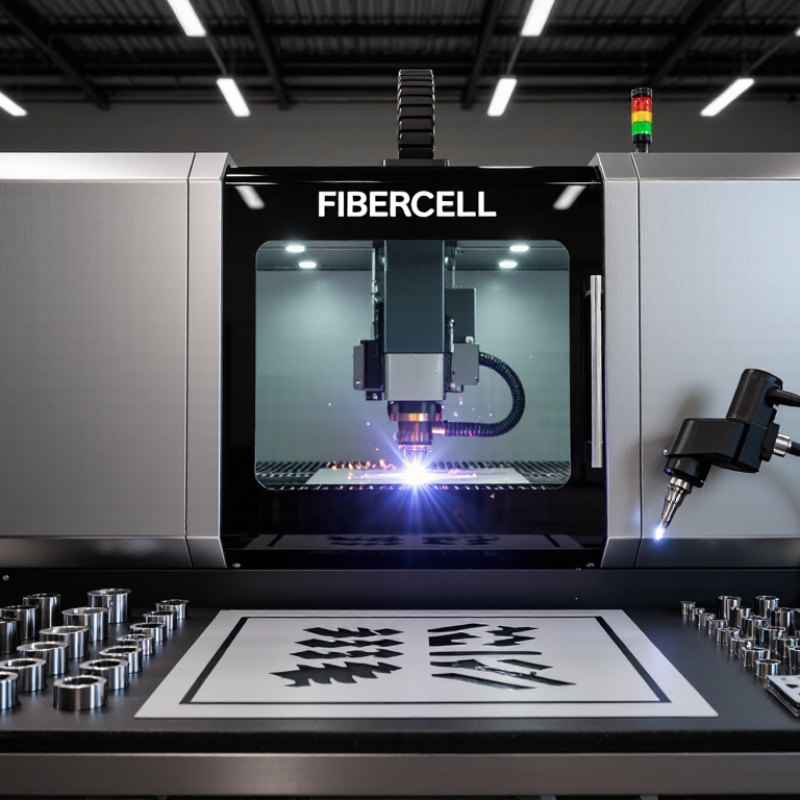
A FiberCELL metal laser cutter is an enclosed cutting system built around a fiber laser source. The source guides light through a specially doped optical fiber, then optics focus the beam onto sheet or plate metal. Heat melts or vaporizes a narrow path, while assist gas clears material from the cut. The enclosure, motion system, extraction, and controls work together as one production cell.
“FiberCELL” is not a universal technical standard. In practice, it usually signals a guarded workspace, but layouts and automation vary. Check the cutting area, material thickness range, loading method, and extraction design. A bright, clean edge is not guaranteed; settings, focus, gas pressure, and metal condition all matter. Small setup errors show up fast.
Automation helps explain the cell format. The International Federation of Robotics reported 541,302 industrial robot installations worldwide in 2023, with 4.28 million robots in operation. That figure covers many industries, not laser cutters specifically. The U.S. Department of Energy’s Industrial Decarbonization Roadmap also attributes about 30% of U.S. energy use to industry. It does not prove a laser cell saves energy. Compare measured electricity and gas use for the actual job. There is no perfect shortcut.
A fiber laser metal cutter uses an optical fiber laser source to produce a concentrated beam for cutting metal. The chart compares the typical emission wavelengths of common industrial laser sources.
How to choose: A fiber laser is commonly used for metal cutting, but the best cutter depends on the material, thickness, required speed, and production needs. The values shown are representative wavelengths, not cutting-capacity ratings.
A fiber laser cutter creates light inside an optical fiber doped with rare-earth elements. Pump diodes energize the fiber, and its resonator amplifies the light into a concentrated beam. The beam travels through a delivery fiber to a cutting head, where a lens focuses it onto the metal. The intense heat melts or vaporizes a narrow line; assist gas clears molten material from the kerf. Common fiber-laser wavelengths are near 1.06 micrometers, which metals absorb effectively. No cutting tool touches the sheet.
The cut depends on more than laser power. Material type, thickness, focus position, feed speed, and gas pressure all shape the edge. A technical setting that works on clean mild steel may leave roughness on reflective or coated stock. A clean cut is not automatic; real setups can surprise you. The International Energy Agency’s Energy Efficiency 2023 report estimates that industry used about 37% of global final energy in 2022, making efficient production choices worth attention. That figure covers all industry, not laser cutting alone.
A metal laser cutter’s performance depends on more than rated power. Beam quality and stable focus help produce narrow, consistent cuts. Motion accuracy matters too. At the edge of a steel sheet, weak acceleration control can leave waviness or excess dross. Check the stated positioning accuracy, repeatability, and cutting-speed data at your intended material thickness.
Assist gas, nozzle condition, and extraction shape the result. Oxygen can support faster cutting of some steels, while nitrogen often leaves a cleaner edge on stainless steel. The trade-off is gas cost and setup sensitivity. Small changes in nozzle height can affect cut quality. The IEA’s Energy Efficiency 2023 report estimates that industry used 37% of global final energy in 2022, making real-world energy use worth measuring—not just advertised source efficiency.
Ask for sample cuts in your common sheet grades and thicknesses. Inspect the kerf, underside dross, edge angle, and heat discoloration under consistent lighting. ISO 9013:2017 provides a framework for assessing thermal-cut surface quality and tolerances. Test time matters. Record cycle time, gas consumption, and rejected parts. A brochure cannot show how a machine behaves after several hours of production. And honestly, one shop-floor test may still miss problems that appear with different operators or worn consumables.
Compare metal laser cutter models by the work they must handle, not by headline power alone. List your common materials, thicknesses, and daily production volume. Then check each model’s rated cutting range against real sample cuts in those materials. A clean edge on thin stainless steel does not guarantee a good result on thicker plate. Ask for test pieces with visible settings, and inspect for dross, taper, and heat discoloration. Small details matter.
Bed size should fit your largest sheet while leaving room for loading and safe handling. Compare acceleration and repeatability, too; these affect cycle time and consistency across many parts. Look at the control interface, nozzle changes, focus adjustment, and access to replacement components. Downtime can erase a modest purchase-price advantage. Very quickly. Also compare the extraction system and enclosure, since fumes and scattered light need proper control in a working shop.
Published specifications rarely tell the whole story. Run the same test file on shortlisted models, using the same material and assist-gas conditions where possible. Record cut time, edge quality, and setup effort. I would also ask operators how often they clean optics and recalibrate; those tasks are easy to underestimate. A neat showroom demonstration is useful, but it is not a production shift. Some comparisons will still feel imperfect, especially when vendors use different test settings. Keep the conditions written down.
Choosing a fiber laser cutter starts with the materials and thicknesses you actually process. List common jobs, such as thin stainless panels, mild-steel brackets, or aluminum enclosures. Be specific. A machine suited to occasional sheet work may not fit daily production or thicker plate.
Compare its rated cutting capacity with your real workload, not just a best-case specification. Check the work area against your largest sheet, and consider how parts will be loaded and removed. A larger bed can save setup time, but it may require more floor space.
Ask about supported file formats, operator training, maintenance access, and service response. These details affect everyday uptime. The laser source matters, but so do assist-gas needs, fume extraction, guarding, and electrical requirements. Confirm them with a qualified supplier before installation.
If possible, request a sample cut using your material and preferred thickness. Inspect the edge for dross, taper, and heat effects.
One small caveat: sample results may differ from long production runs. Match the cutter to your shop, budget, and expected workload, while leaving room for realistic growth.
Beam quality, stable focus, motion accuracy, assist gas, and nozzle condition all matter. Inspect cut edges for dross, taper, and heat discoloration.
Test the same file on the same material and thickness. Record cut time and rejected parts. A showroom demo is not a full production shift.
Oxygen can cut some steels faster, while nitrogen often leaves stainless steel cleaner. Gas cost and setup sensitivity matter. Results can vary.
Check the kerf, underside dross, edge angle, and heat marks under consistent lighting. ISO 9013:2017 offers a framework for assessing thermal-cut quality.
Fit the largest sheet, with room to load and remove it safely. A larger bed may save setup time, but it needs more floor space.
Compare positioning accuracy, repeatability, acceleration, and cutting range. Rated power alone will not predict every result.
Check controls, nozzle changes, focus adjustment, maintenance access, replacement parts, and service response. Downtime adds up.
Yes. Compare real operating energy use, extraction, enclosure, gas needs, and electrical requirements. Confirm installation details with a qualified supplier.
Not always. Try common materials and thicknesses, then record setup effort and cycle time. I might still miss issues that appear with worn consumables or different operators.
A FiberCELL Metal Laser Cutter uses a focused fiber-laser beam to cut metal with precision and consistency. The beam heats a small area until the material separates, while controlled motion guides the cut along the required shape. Cutting results depend on factors such as laser power, material type and thickness, motion speed, and the quality of the cutting head and control system. Together, these features influence edge quality, accuracy, productivity, and the range of jobs a machine can handle.
To compare FiberCELL cutter models, consider their working area, power options, supported materials, automation features, ease of operation, and ongoing maintenance needs. The best choice depends on your typical workload: a compact model may suit occasional or smaller projects, while a higher-capacity system may be more practical for frequent production or thicker materials. Match the machine’s capabilities to your requirements rather than choosing by a single specification, and consider available workspace, operator experience, and future demand.