Choosing a Micro Small Format Laser System is not simply a matter of selecting the smallest machine. It requires a clear match between material, marking area, accuracy, speed, and daily production demands. A compact system may sit beside a workbench, yet it still needs stable motion, reliable cooling, safe enclosure design, and consistent beam performance.
Laser pioneer Theodore H. Maiman is often credited with saying, “The laser is a solution looking for a problem.” That warning remains useful today. The right system begins with the application, not the product brochure. Consider whether you are marking stainless steel parts, engraving coated plastics, cutting thin foils, or processing delicate electronics. Each task may require a different wavelength, pulse duration, lens, and power range. Test samples matter more than attractive specifications.
Look closely at the smallest details. Can the focusing point remain stable after several hours? Does the software support repeatable positioning? Can operators clean the lens without disrupting alignment? Ask for measured results on your actual materials. Vendor claims are helpful, but independent testing is stronger.
There is no perfect configuration. Some buyers prioritize speed and later discover excessive heat distortion. Others choose extreme precision and accept slower output. That trade-off deserves honest attention. A dependable Micro Small Format Laser System should fit your workflow, operator skill, maintenance capacity, and documented safety procedures. Choose performance you can verify, not promises you merely hope will hold.
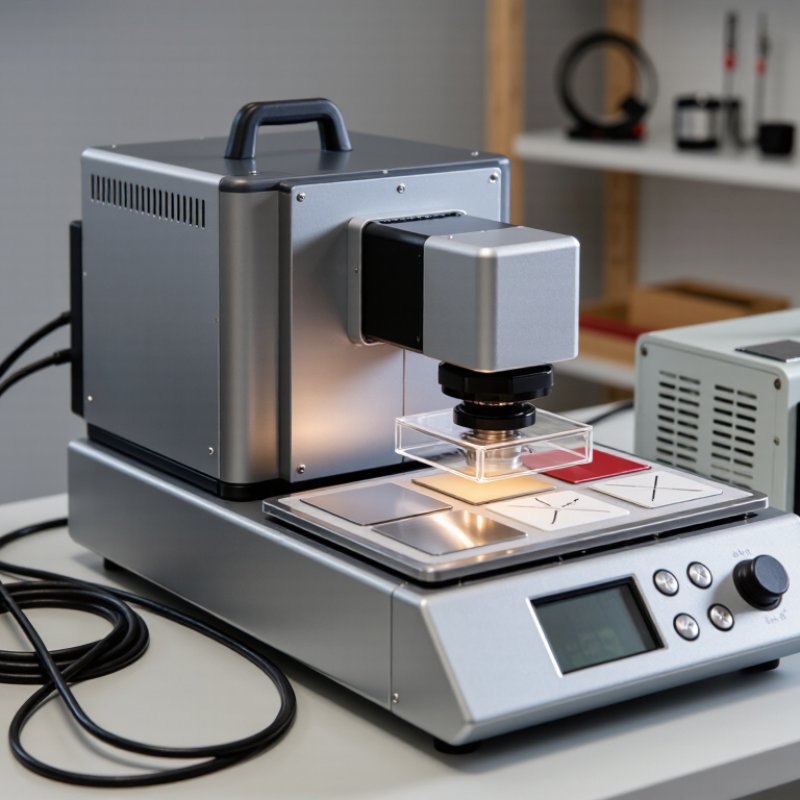
How to Choose a Micro Small Format Laser System?
Choosing a micro small format laser system starts with the material, not the machine’s advertised speed. Identify whether you will mark metal, coated surfaces, plastics, glass, or delicate composites. Each material absorbs laser energy differently. Test samples should include real production batches, not only clean laboratory pieces. Surface coatings, oils, and slight color changes can affect results.
Define the required features beside the material list. A compact work area may suit small components, while adjustable focus helps manage uneven surfaces. Consider extraction, enclosure access, software control, and fixture compatibility. Precision also needs a measurable target. Specify line width, character height, edge quality, repeatability, and acceptable contrast. In practical trials, inspect marks under normal lighting and magnification. A result can look sharp but fail after cleaning or handling. I have found that speed settings often need adjustment between batches. That is easy to overlook.
Tips: Keep a sample log. Record power, speed, focus, passes, and surface preparation. Compare at least three settings before selecting one. Ask whether the system maintains accuracy across the entire work area. Do not trust a single successful mark. Thermal distortion, dust, and operator alignment can change the outcome. Leave room for testing. The first setting is rarely perfect.
Choosing a micro small format laser system begins with the material, not the machine’s advertised power. Metals, ceramics, polymers, and coated surfaces absorb different wavelengths. A suitable source should create the required mark or cut with controlled heat.
For fine metal marking, a short-pulse infrared source can produce sharp contrast with limited discoloration. Ultraviolet wavelengths often suit sensitive plastics and thin coatings. For delicate glass or ceramic work, ultrafast pulses may reduce cracking and heat-affected edges. Pulse duration matters greatly. So does spot size.
In practical trials, I compare edge quality under a microscope, not only production speed. A higher-power source once looked attractive, but it caused unwanted burrs on a small stainless-steel part. That result changed the selection criteria. Test samples should match the real thickness, surface finish, and production cycle. Ask for measured beam quality, pulse stability, and repeatability data. Check whether the system maintains focus across the working area. A small error becomes obvious on a 0.1-millimeter feature.
Cooling, extraction, software control, and operator access also affect reliable processing. These details are easy to underestimate. Request application testing before purchase, and record the settings used for each sample. A system that performs beautifully once may not remain consistent during an eight-hour shift. Review maintenance requirements, training support, and safety documentation with the same care as the laser source.
How to Choose a Micro Small Format Laser System?
Choose the Right Working Area and Machine Configuration
Choosing a micro small format laser system starts with the working area, not the catalog footprint. Measure the largest real part, then add clearance for clamps, scrap, and loading. A 300 × 300 mm bed may fit one sample, yet fail when fixtures or warped sheets enter production. In my experience, ten millimeters of missing clearance can stop a whole shift. Small details matter.
Grand View Research estimates that the global laser cutting machine market reached about USD 5.7 billion in 2023. Its forecast indicates continued growth through 2030. This trend reflects demand for flexible, compact processing equipment. For thin metal, film, or precision components, compare fixed-bed, galvo, and hybrid configurations carefully. A smaller scan field can improve spot consistency, but it reduces nesting freedom. A larger bed offers flexibility, but may increase motion errors and maintenance needs.
Configuration should match the material, not only the part size. Check laser power, focal length, axis travel, extraction capacity, cooling, and assist-gas control. The U.S. Department of Energy reports that compressed-air leaks can waste 20–30% of compressor output. Efficient gas delivery therefore deserves attention. Request repeatability results measured under ISO 230-2 conditions. Ask for test cuts using your actual material and thickness. I would still question a perfect brochure number. Real production includes dust, heat, operator variation, and occasional mistakes.
| Selection Dimension | Recommended Configuration | Typical Technical Range or Application | What to Check Before Purchase |
|---|---|---|---|
| Working Area | Match the bed to the largest regular workpiece |
300 × 200 mm
400 × 300 mm
600 × 400 mm A 300 × 200 mm bed suits small labels, jewelry, electronic parts, and prototypes. A 400 × 300 mm or 600 × 400 mm bed provides more room for signage, panels, and batch production. |
Allow clearance for fixtures, material edges, and ventilation. A larger bed does not automatically increase laser power or cutting capacity. |
| Laser Wavelength | Select the wavelength according to the material |
CO₂: commonly used for acrylic, wood, paper, leather, rubber, textiles, and some coated materials. Fiber: commonly used for marking metals and some engineering plastics. UV: suitable for high-contrast, low-heat marking on many plastics, glass, films, and sensitive components. |
Confirm absorption, surface finish, color, additives, and whether the material supplier permits laser processing. |
| Laser Power | Choose power from the thickest frequent material |
10–30 W Fine marking and light engraving 30–60 W Detailed engraving and thin-sheet cutting 60–120 W Faster cutting of thicker non-metal materials 20–50 W fiber Metal marking and light engraving |
Higher wattage can improve cutting speed, but results also depend on lens, focus, material, air assist, and number of passes. |
| Precision and Spot Size | Prioritize beam quality and motion accuracy for small details | Fine engraving generally benefits from a small focused spot, stable mechanics, rigid guides, and accurate calibration. The practical result depends on the complete optical and motion system rather than laser power alone. | Ask for repeatability data, test patterns, minimum readable text size, corner quality, and performance across the full working area. |
| Motion Configuration | Use a gantry, galvo, or hybrid layout based on the task |
Gantry: flexible working area and suitable for cutting and engraving. Galvo: high-speed marking over a defined field, usually with limited cutting capability. Hybrid: combines positioning flexibility with fast marking for mixed workflows. |
Compare usable field size, marking speed, acceleration, positioning accuracy, and whether rotary or height-axis accessories are supported. |
| Lens and Focus | Select the focal length for detail, depth, or thickness | Shorter focal lengths generally produce a smaller spot and finer detail. Longer focal lengths provide greater depth of focus and may be more tolerant of uneven or thicker materials. | Check available lens options, focus method, autofocus range, working clearance, and whether the lens can be replaced or cleaned easily. |
| Material Thickness | Use published test results rather than nominal maximum thickness | Cutting capability varies significantly by material type, density, color, moisture, thermal properties, and desired edge quality. Thin plastics, paper, wood, fabric, and coated materials often require different settings. | Request sample cuts at the intended thickness and evaluate edge charring, melting, kerf width, dimensional accuracy, and cycle time. |
| Cooling System | Choose air cooling for compact marking systems and liquid cooling for higher heat loads | Air-cooled sources simplify installation and maintenance. Water-cooled systems can provide stable temperature control for higher-power laser sources and extended operating cycles. | Verify ambient temperature limits, coolant requirements, alarm functions, maintenance intervals, and heat dissipation inside the workspace. |
| Fume Extraction | Use dedicated filtration or externally ducted extraction | Cutting and engraving can release smoke, vapors, particles, and unpleasant odors. Extraction performance should match the enclosure volume, material, and duty cycle. | Confirm airflow, filtration stages, filter replacement cost, noise level, duct requirements, and compatibility with the intended materials. |
| Workholding and Accessories | Add accessories that reduce setup time and improve repeatability | Useful options may include honeycomb or knife beds, rotary attachments, height-adjustable tables, pin fixtures, camera alignment, air assist, and fume extraction. | Check accessory compatibility, maximum workpiece diameter, fixture repeatability, alignment accuracy, and whether tools can be installed without changing the main configuration. |
| Software and File Handling | Choose software that fits the existing design workflow | Common requirements include vector and raster processing, layered jobs, variable data, barcode or QR code marking, parameter libraries, job previews, and support for standard vector or image file formats. | Test import quality, scaling accuracy, font handling, camera registration, user permissions, and compatibility with the operating system used by the production team. |
| Safety Configuration | Use a fully enclosed system with interlocks for general operation | A suitable enclosure should limit access to hazardous laser radiation and include door interlocks, emergency stop controls, warning indicators, and appropriate viewing protection. | Review the applicable laser-safety requirements, electrical protection, interlock behavior, fire prevention measures, and operator training needs. |
| Footprint and Utilities | Reserve space for the machine plus service access | Compact systems may still require room for extraction, cooling, material loading, computer access, and maintenance. Utility needs can include electrical power, compressed air, ventilation, and network connectivity. | Measure doorways, elevators, bench depth, power supply, ventilation routes, noise restrictions, and clearance around access panels before installation. |
| Best-Fit Application | Select the configuration that matches the dominant workflow |
Precision marking: prioritize wavelength, spot size, focus stability, and camera alignment. Small-part cutting: prioritize working area, power, air assist, extraction, and bed design. Mixed production: prioritize interchangeable lenses, accessories, software flexibility, and repeatable setup. |
Define the main material, maximum part size, required throughput, tolerance, duty cycle, and expected future applications before final selection. |
Speed is not simply the highest advertised wattage. A 2024 MarketsandMarkets report valued the global laser technology market at approximately USD 18.4 billion in 2023, reflecting broader demand for efficient processing. In practice, measure completed parts per hour, including loading, focusing, cleaning, and inspection. A small system may process 40 labels per minute, yet lose time during frequent setup changes. Test your actual material, line thickness, and artwork before purchasing. Real samples matter more.
Accuracy depends on beam quality, motion control, thermal stability, and fixturing. For micro text, a 0.02-millimeter positioning error can visibly distort characters. Ask for repeatability data, not only resolution claims. ISO 230-2 testing principles can help compare positioning performance, although they do not replace an application trial. Tiny details expose weak calibration quickly.
Software also deserves careful review. Look for automatic parameter libraries, vector editing, barcode support, user permissions, and clear job-history records. Complex software creates hidden training costs. Operating costs include lenses, filters, compressed air, electricity, maintenance, and rejected parts. A 2023 Fortune Business Insights report estimated the laser marking machine market at USD 3.52 billion, showing strong industrial adoption, but adoption does not guarantee low ownership cost. Request a 12-month cost estimate from suppliers. Include downtime. I would also calculate payback using conservative throughput, not the best demonstration result. That assumption may feel pessimistic, but production is rarely perfect.
Safety should be verified before speed, resolution, or price. A micro laser system needs a guarded work area, door interlocks, emergency stops, and clear beam-path controls. Check its classification against IEC 60825-1, not only the supplier’s brochure. The U.S. Bureau of Labor Statistics reported 2.6 million nonfatal workplace injuries in 2023, showing why routine risk control still matters. A small footprint does not mean small hazards.
Support becomes critical when alignment shifts or software fails. Ask for response times, remote diagnostic procedures, spare-parts availability, and technician training records. The International Federation of Robotics reported over 500,000 industrial robots installed globally in 2023. That growth increases demand for qualified integration and maintenance skills. Still, a polished service promise can hide weak local coverage. Request references from comparable production environments. Test the escalation process before purchase.
Tips: Run a sample job for several hours. Inspect edge quality, fume extraction, noise, and repeatability. Ask for a preventive-maintenance schedule with estimated costs. Leave space for future rotary devices, automation, or upgraded controls. MarketsandMarkets projects continued growth in the laser processing market through 2029, but forecasts are not guarantees. A system that fits today may become restrictive next year. Document every assumption, especially throughput and operator workload.
Start with the material, not the advertised speed. Metal, plastic, glass, coatings, and composites absorb laser energy differently. Test real production samples with oils, dust, and color variations. Clean laboratory samples can mislead you.
Measure the largest actual part, then add space for clamps, scrap, and loading. A 300 × 300 mm bed may fit one sample but fail with a fixture. Ten missing millimeters can stop production. Small details matter.
Compare fixed-bed, scanning, and hybrid configurations against your material and part size. Check laser power, focal length, axis travel, cooling, extraction, and assist-gas control. A smaller scan field may improve consistency. A larger bed may provide easier nesting.
Set measurable targets for line width, character height, contrast, edge quality, and repeatability. Inspect marks under normal lighting and magnification. A sharp mark may fade after cleaning or handling. Define acceptable results before testing.
Record power, speed, focus, passes, and surface preparation in a sample log. Compare at least three settings. The first setting is rarely perfect. Test several hours, not just one attractive sample.
Look for a guarded work area, door interlocks, emergency stops, and controlled beam paths. Check safety classification against IEC 60825-1. A compact machine still creates serious hazards. Safety comes before speed.
Ask about response times, remote diagnostics, spare parts, technician training, and local coverage. Request a preventive-maintenance schedule with estimated costs. Test the support escalation process before purchase. Promises can sound better than reality.
Leave room for rotary devices, automation, upgraded controls, and additional fixtures. Document expected throughput and operator workload. A system that fits today may restrict next year’s production. Forecasts help, but they are not guarantees.
Choosing the right Micro Small Format Laser System begins with a clear understanding of the materials you plan to process, the features required, and the level of precision your work demands. Consider whether you need cutting, engraving, marking, or fine-detail processing, then select a laser source that matches the material’s properties and the intended application. The system’s working area and configuration should also fit your product size, workspace, production volume, and future workflow.
A complete comparison should include processing speed, positioning accuracy, software usability, and total operating costs—not only the initial purchase price. Evaluate energy consumption, consumables, maintenance needs, and ease of operation to understand long-term value. Safety features, technical support, training, and service availability are equally important for reliable daily use. Finally, consider whether the system can be upgraded with improved software, accessories, automation, or expanded capabilities as your business develops. A well-matched solution should provide consistent results, efficient operation, and room for future growth.