0%

Choosing the best China Sheet Metal Fiber Laser Cutter requires more than comparing laser power or purchase prices. A practical buyer examines cutting accuracy, source stability, machine structure, software, safety systems, and local technical support. The right machine should match your daily materials, thickness range, production speed, and workshop conditions.

David A. Belforte, a respected industrial laser analyst and editor, has emphasized a useful principle: “The best laser is the one that fits the application, not the one with the highest power.” This idea remains important when evaluating Chinese equipment. A 3 kW machine may handle stainless steel sheets efficiently, while a 6 kW model could be excessive for a small fabrication shop. Test cuts matter. Request samples using your actual mild steel, aluminum, or stainless steel grades. Inspect edge smoothness, corner quality, piercing marks, and dimensional accuracy.

Look beyond the cutting head. Check the fiber laser source, motion system, nesting software, fume extraction, and replacement-part availability. Ask whether engineers provide installation training and remote diagnosis. These details affect real productivity after delivery. A low quotation can hide expensive downtime.

There is no perfect machine. Some specifications remain unclear until production begins. Even experienced buyers can overlook gas consumption or maintenance access. That is why a careful comparison should include verified test results, customer references, warranty terms, and a written service response time. The strongest choice is not always the fastest machine. It is the one that cuts consistently, fits your workflow, and remains supportable for years.
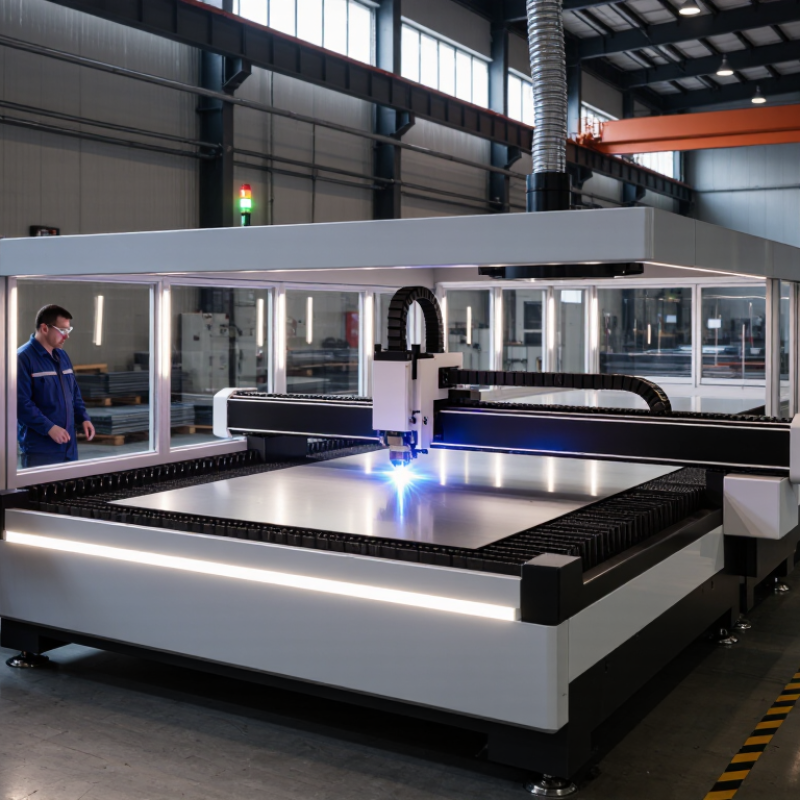
What Is the Best China Sheet Metal Fiber Laser Cutter?

What Defines a High-Quality China Sheet Metal Fiber Laser Cutter?

A high-quality China sheet metal fiber laser cutter is defined by measurable performance, not a low purchase price. Grand View Research estimates the global fiber laser market will grow at about 11% annually through 2030. That growth reflects demand for faster, cleaner, and more automated cutting. Yet market growth does not guarantee machine quality.

In practical factory use, inspect beam stability, cutting speed, edge finish, and repeatability. A reliable machine should maintain consistent kerf width across mild steel, stainless steel, and aluminum sheets. ISO 9013 provides a useful reference for thermal-cut quality and surface classification.

Check whether the supplier reports actual test results, not only maximum power. A 6 kW source may cut quickly, but poor motion control can still leave dross around small holes. That detail matters.

Frame rigidity also matters. Excess vibration can distort corners during high-speed acceleration. Look for repeatability data, calibrated positioning systems, automatic nozzle alignment, and documented maintenance intervals. The International Organization for Standardization emphasizes traceable measurement and process control in quality systems, including ISO 9001 practices. Ask for factory videos, sample parts, inspection records, and service response times.

Some specifications remain surprisingly vague. That deserves scrutiny. A few suppliers publish optimistic speeds without stating material grade, thickness, gas pressure, or cutting strategy. Buyers should test their own drawings before ordering. Real production conditions are rarely perfect. A careful acceptance test may reveal small weaknesses before they become expensive downtime.

How to Compare Laser Power, Cutting Speed, and Material Capacity

Choosing the best China sheet metal fiber laser cutter depends on matching power, speed, and material capacity to your daily work.

Higher power can cut thicker steel, but it does not always improve thin-sheet production. Excessive power may increase energy use and create wider kerfs. A practical comparison should include tested samples, edge quality, piercing time, and machine stability.

Cutting speed must be measured under real conditions. Ask for results using your typical thickness, assist gas, and sheet type. Stainless steel, mild steel, and aluminum behave differently.

A machine may advertise high speed, yet slow down during corners, small holes, or repeated piercing. I would also check acceleration, positioning accuracy, and the control system. Marketing figures can be incomplete. That matters.

Tips:

Compare complete cutting charts, not one impressive sample. Confirm the maximum thickness for continuous production, not occasional cutting.

Check the working table size, loading method, cooling system, and replacement-part availability. A larger bed helps with full sheets, but it also needs more floor space.

Lower power may be enough for thin materials and reduce operating costs. Still, choosing too little power can limit future orders.

The better decision comes from your actual material mix, expected workload, and service support. Test before purchase.

Which Machine Features Improve Precision, Safety, and Production Efficiency?

Choosing the best China sheet metal fiber laser cutter requires more than checking laser power. Precision begins with a rigid frame, stable linear guides, and a reliable servo system. These parts reduce vibration when cutting thin stainless steel or 12 mm carbon steel. An automatic focusing head also adjusts the focal position quickly. This saves setup time and helps maintain clean edges across different sheet thicknesses.

Safety features deserve equal attention. A fully enclosed cutting area limits exposure to laser radiation and flying sparks. Door interlocks should stop the beam immediately when the enclosure opens. Effective fume extraction keeps smoke away from operators and optical components. I also look for emergency stops, thermal monitoring, and clear fault alarms. Small details matter.

Production efficiency depends on software and daily maintenance. Nesting software can reduce material waste by arranging parts closely. Automatic nozzle changing and height sensing shorten idle periods. Real-time monitoring can warn technicians about lens contamination, gas pressure, or overheating. In practical workshops, these warnings prevent expensive interruptions. Still, no machine stays perfect. Dust, poor cooling water, and incorrect assist-gas pressure can reduce accuracy. Operators should inspect the nozzle and protective lens every shift. A test cut on a small sample remains wise, even when the machine appears ready.

What Is the Best China Sheet Metal Fiber Laser Cutter? - Which Machine Features Improve Precision, Safety, and Production Efficiency?

Machine Configuration Typical Laser Power Recommended Mild Steel Cutting Range Recommended Stainless Steel Cutting Range Positioning Accuracy Repeatability Maximum Rapid-Travel Speed Typical Acceleration Precision and Productivity Features Safety Features
Entry-Level Sheet Metal Cutter 1 kW 0.5–10 mm 0.5–6 mm ≤ ±0.03 mm/m ≤ ±0.02 mm 80–100 m/min 0.8–1.0 G Automatic focusing head, closed-loop servo drives, slat-table support, and automatic edge finding Fully enclosed work area, door interlock, viewing window, emergency-stop circuit, and laser-radiation shielding
General-Purpose Production Cutter 3 kW 0.5–20 mm 0.5–12 mm ≤ ±0.03 mm/m ≤ ±0.02 mm 100–120 m/min 1.0–1.2 G Automatic nozzle changing, capacitive height sensing, piercing control, nesting software, and cutting-parameter libraries Enclosed Class 1-style cabinet design, interlocked access doors, smoke extraction, fire monitoring, and fault alarms
High-Throughput Production Cutter 6 kW 0.5–30 mm 0.5–25 mm ≤ ±0.03 mm/m ≤ ±0.02 mm 120–140 m/min 1.2–1.5 G Fast piercing cycles, automatic focus calibration, dual-pallet exchange, optimized gas control, and real-time process monitoring Interlocked enclosure, pressure and temperature monitoring, automatic fire detection, fume extraction, and power-disconnect protection
Heavy-Duty High-Power Cutter 12 kW 0.5–40 mm 0.5–35 mm ≤ ±0.05 mm/m ≤ ±0.03 mm 100–120 m/min 1.0–1.3 G High-power cutting head, automatic beam alignment, adaptive piercing, pallet changer, remote diagnostics, and production data tracking Fully enclosed guarded zone, door interlocks, optical protection, thermal monitoring, automatic fire suppression options, and emergency shutdown

Note: The values shown are representative operating ranges commonly specified for industrial sheet metal fiber laser cutters. Actual cutting thickness, speed, accuracy, and energy consumption depend on material grade, sheet condition, assist gas, nozzle type, machine structure, software settings, and environmental conditions.

How to Evaluate Manufacturers, Certifications, Service, and Warranty Support

What Is the Best China Sheet Metal Fiber Laser Cutter?

Choosing a China sheet metal fiber laser cutter requires more than comparing prices and power ratings. In machine-buying work, I have learned that manufacturer evaluation often reveals more than a sales brochure. Ask how long the factory has produced laser equipment, which markets it serves, and whether it can provide recent customer references. Request videos of cutting tests using your actual steel thickness. A clean showroom sample is not enough.

Certifications deserve careful checking. Confirm ISO 9001 quality procedures, CE conformity documents, electrical safety reports, and applicable laser protection standards. Do not trust logos alone. Ask for document numbers, issuing bodies, and matching machine models. A reliable manufacturer should explain component origins, inspection steps, and final testing records without hesitation. Factory acceptance testing should include positioning accuracy, repeated cuts, piercing time, and emergency-stop operation.

Service and warranty terms can decide the real cost of ownership. Check whether installation, operator training, remote diagnostics, and software updates are included. Clarify response times for faults, replacement-part availability, and who pays shipping. Warranty coverage should state the period, excluded consumables, laser-source conditions, and labor responsibilities. Get everything in writing.

Small details matter.
So does honesty.

I once overlooked training quality because the machine specification looked impressive. That mistake caused avoidable setup delays. A manufacturer may not promise perfection, but it should describe limitations clearly and provide a practical recovery plan when problems occur.

How to Select the Best Fiber Laser Cutter for Your Metalworking Needs

What Is the Best China Sheet Metal Fiber Laser Cutter?

How to Select the Best Fiber Laser Cutter for Your Metalworking Needs

Choosing a fiber laser cutter starts with your actual workload, not a catalogue promise. Sheet thickness, material type, daily cutting hours, and required edge quality should guide the decision. A 2024 Fortune Business Insights report valued the global fiber laser market at more than 6 billion US dollars. It also projects continued growth through 2032. That growth reflects wider industrial adoption, but market growth does not guarantee the right machine for your workshop.

Check the laser source power, cutting head stability, motion accuracy, and cooling system. For thin stainless steel, excessive power may increase cost without improving production. For thicker carbon steel, insufficient power can create slow cuts and rough edges. In practical testing, operators should inspect pierced holes, corners, slag, and repeatability after several hours. One clean sample is not enough. I would also question impressive speed figures. They often exclude piercing time, loading, and material changes. These details can reshape real output.

Tips: Request sample cuts using your own metal. Compare cycle time, kerf quality, energy use, and maintenance records. Ask whether replacement optics are available locally. Check training support and software compatibility. A lower purchase price can become expensive when downtime starts. The best cutter is not always the fastest. It is the one that performs consistently under your normal workload. Even experienced buyers sometimes overlook operator comfort and fume extraction, which deserve a second review.

FAQS

Which machine features improve cutting precision?

A rigid frame reduces vibration during cutting. Stable linear guides support accurate movement. Reliable servo systems improve repeatability. Automatic focusing adjusts the focal position for different sheet thicknesses. Clean edges matter.

How can a laser cutter improve operator safety?

A fully enclosed cutting area limits laser and spark exposure. Door interlocks should stop the beam when the door opens. Emergency stops and clear fault alarms support quick responses. Thermal monitoring adds another safety layer.

Why is fume extraction important?

Effective extraction removes smoke from the cutting zone. It protects operators and optical components. Poor extraction can cloud lenses and reduce visibility. The workshop air should remain clear.

Which features increase production efficiency?

Nesting software places parts closely and reduces material waste. Automatic nozzle changing shortens idle periods. Height sensing helps maintain consistent cutting distances. Real-time monitoring can warn about overheating, gas pressure, or lens contamination.

How should a manufacturer be evaluated?

Check its production history and served markets. Request recent customer references. Ask for cutting videos using your actual steel thickness. A polished showroom sample is not enough.

Which certifications and documents should buyers verify?

Ask for ISO 9001 procedures and CE conformity documents. Request electrical safety reports and applicable laser protection records. Check document numbers, issuing bodies, and matching machine models. Do not trust logos alone.

What should factory acceptance testing include?

Testing should measure positioning accuracy and repeated-cut consistency. It should also check piercing time and emergency-stop operation. Request written results. Missing records deserve questions.

What should warranty and service agreements cover?

Confirm installation, operator training, remote diagnostics, and software updates. Clarify fault response times and replacement-part availability. Check shipping and labor responsibilities. Consumable exclusions should be written clearly.

How can operators maintain cutting accuracy?

Inspect the nozzle and protective lens every shift. Check cooling water and assist-gas pressure. Dust can reduce accuracy. A small test cut remains wise, even when the machine looks ready.

What common buying mistake should purchasers avoid?

Do not choose only by power or price. I once ignored training quality because the specifications looked impressive. Setup delays followed. A supplier should explain limitations and provide a practical recovery plan.

Conclusion

Choosing the best Sheet Metal Fiber Laser Cutter requires more than comparing price or advertised power. A high-quality machine should deliver stable beam performance, accurate motion control, strong construction, and reliable results across common sheet materials. Buyers should evaluate laser power according to material type, thickness, cutting speed, workload, and future production goals. Features such as automatic focusing, efficient cooling, enclosed protection, intelligent monitoring, and user-friendly controls can improve precision, operator safety, and overall productivity.

Manufacturer evaluation is equally important. Consider engineering experience, production quality, testing procedures, certifications, installation guidance, training, spare-parts availability, and responsive technical support. Warranty terms should clearly explain coverage, service expectations, and maintenance responsibilities. The ideal machine is one that balances cutting capability, operating cost, energy efficiency, automation, and long-term reliability. By matching these factors with actual metalworking needs and expected production volume, businesses can select a fiber laser cutter that supports consistent quality, efficient workflow, and sustainable growth.

Ethan

Ethan

Ethan is a dedicated marketing professional with a strong understanding of the company’s products, services, and market environment. With a background in strategic communication, customer research, and content development, he transforms complex product information into clear, practical, and......