Warehouse automation is moving from a competitive advantage toward an operational necessity. MHI’s 2024 Annual Industry Report identifies robotics and automation as major investment priorities for supply chain leaders. This trend reflects a practical challenge: warehouses must increase throughput without expanding floor space or labor costs.
The OptiShuttle Dual Table System deserves attention because it supports high-density storage and more flexible order handling. Its dual-table design can help separate inbound and outbound movements. That separation may reduce waiting at workstations. However, performance depends on SKU profiles, order patterns, software integration, and maintenance planning. A brochure cannot prove real-world suitability.
This guide reviews seven prominent OptiShuttle Dual Table System suppliers and solution partners. The comparison considers engineering experience, integration capability, commissioning support, lifecycle service, and reference projects. It also considers measurable details, such as shuttle speed, storage height, tote dimensions, workstation design, and recovery procedures after faults. These factors often matter more than headline capacity.
Interviews with vendors and warehouse operators can reveal uncomfortable gaps. Some suppliers offer impressive demonstrations but limited local support. Others provide strong service but less flexible customization. That distinction deserves careful attention. Industry research from Interact Analysis also shows continued growth in warehouse automation investment, although forecasts vary by region and technology category.
No supplier is ideal for every facility. Site validation remains essential. Readers should request test data, total-cost estimates, integration timelines, and customer references before choosing a partner. This ranking is a practical starting point, not a substitute for engineering due diligence.
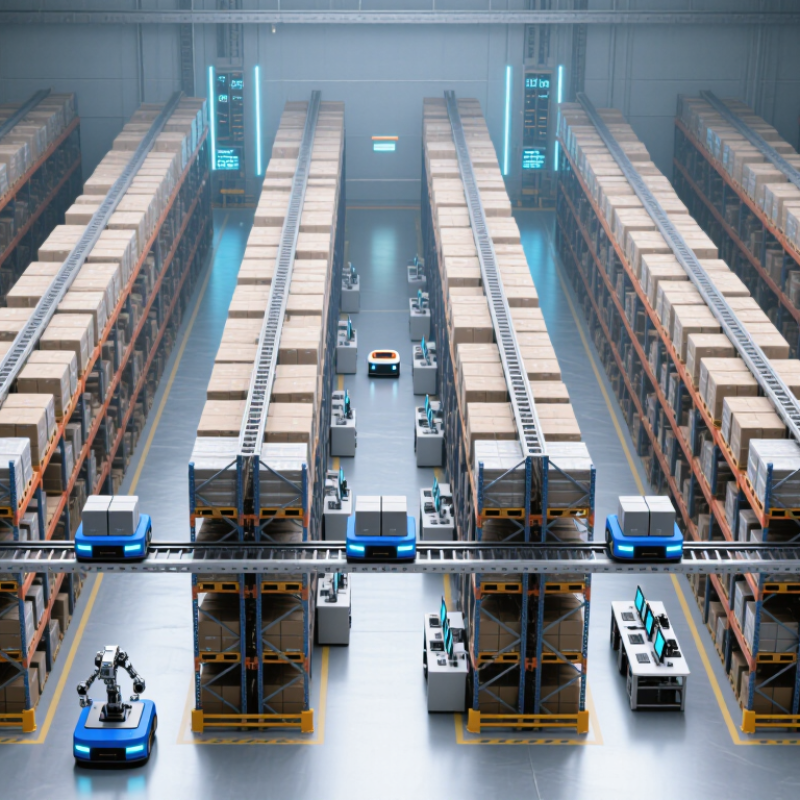
OptiShuttle dual-table systems use two interchangeable work surfaces to reduce waiting time. While one table presents a load, the second table returns for loading or inspection. The architecture usually includes a vertical storage frame, shuttle carriage, lift mechanism, drive motor, sensors, and a programmable control unit. A compact footprint matters when aisles are tight.
In practice, the workflow begins with an operator loading totes, cartons, or trays onto an external table. The shuttle transfers that table into storage and retrieves the next available load. Sensors check position, clearance, and table identity before movement continues. A useful supplier should explain cycle-time testing, table tolerances, emergency stops, and software integration. MHI’s 2024 Annual Industry Report found that 88% of respondents planned to increase supply-chain technology investment over five years. That figure supports automation interest, but it does not guarantee a suitable installation.
Core components deserve closer inspection. Ask for motor duty ratings, bearing replacement intervals, barcode or RFID options, and recovery procedures after power loss. Deloitte’s 2024 Smart Manufacturing survey reported that 86% of manufacturers view smart manufacturing as important for competitiveness. Yet connectivity can become expensive if the supplier uses closed interfaces. I have seen specifications focus on maximum capacity while ignoring uneven floors, operator reach, and real loading behavior. Those omissions can distort payback calculations. A factory should request measured throughput, noise data, maintenance access drawings, and a live fault demonstration before selecting a supplier.
Supplier A targets compact warehouses, offering about 90–120 moves per hour, loads near 1,000 kilograms, and 45–55 second cycles.
Supplier B supports heavier pallets, reaching approximately 1,500 kilograms per table, but its cycle time may approach 65 seconds.
Supplier C focuses on speed, with reported throughput near 150 moves per hour and cycle times below 40 seconds under balanced conditions.
Supplier D presents a wider operating range, from 800 to 1,300 kilograms, with throughput depending heavily on aisle length.
Supplier E appears suited to mixed-load storage. Its dual-table layout can reduce waiting between retrieval and replenishment tasks, although published cycle figures need careful validation.
Supplier F emphasizes high load stability, commonly around 1,800 kilograms, while maintaining moderate throughput near 100 moves per hour.
Supplier G offers a practical middle ground, combining approximately 1,200-kilogram capacity with 45-second cycles in controlled tests.
Numbers can mislead.
During site evaluations, I would measure ten consecutive cycles with real pallets, not empty carriers. Acceleration, barcode checks, operator distance, and safety pauses can change results sharply.
A supplier claiming the fastest cycle may use ideal spacing and no congestion. That comparison is incomplete.
Request test videos, maintenance intervals, recovery procedures, and measured performance under peak load before selecting a system.
Evaluating dual table shuttle suppliers requires more than a catalogue capacity figure. Real performance depends on pallet weight, travel distance, rack height, and software response. In repetitive flows, 30 to 60 pallet movements per hour per aisle offers a useful planning benchmark. Higher rates may be possible during short peak periods. Ask suppliers to demonstrate sustained output, not a brief peak.
Storage density should be measured as usable pallet positions per square metre, not simply rack height. A well-designed system can reduce travel aisles and increase usable capacity by 20% to 40% compared with conventional forklift storage. However, excessive occupancy can slow replenishment and create blocked locations. Targeting 85% to 92% occupancy often protects operational flexibility. This trade-off is easy to overlook.
System uptime deserves equally careful testing. A credible supplier should provide maintenance records, fault-response times, spare-parts availability, and software recovery procedures. Many facilities target at least 98% mechanical availability during scheduled operating hours. Define exclusions clearly, including power failures and operator errors. Site acceptance tests should record pallets per hour, recovery time, and communication faults. Data logging is essential. Even experienced teams sometimes measure the wrong shift, then overestimate performance. A small pilot may reveal queueing problems that a polished demonstration hides.
Selecting among the 7 best OptiShuttle dual table system suppliers requires more than comparing throughput claims. ISO 3691-4 should guide the safety review. It addresses driverless industrial trucks, including risk assessment, protective fields, emergency stops, and operating zones. Ask suppliers for functional safety evidence, not only a certificate. A warehouse may look orderly while a shuttle moves beside pedestrians.
Integration is equally important. The WMS should release orders, confirm inventory, and manage exceptions. The WCS should coordinate shuttle movement, lifts, conveyors, and safe recovery states. MHI’s 2024 Annual Industry Report reported that 55% of supply chain professionals were already using robotics and automation. That adoption makes reliable interfaces essential. Use documented APIs, alarm histories, role-based access, and tested data handshakes. A missed confirmation can create a full lane of false inventory.
Request FAT and SAT procedures with realistic loads, blocked locations, power loss, and manual recovery. Include cycle-time measurements from peak conditions, not only empty-table demonstrations. Interact Analysis has projected strong long-term growth for warehouse mobile robotics, but growth does not guarantee safe integration. A supplier can pass a checklist and still create awkward operator behavior. That gap matters. Review training records, maintenance access, cybersecurity controls, and ISO 3691-4 risk files with an independent engineer. Leave room for doubt. The best supplier is the one that explains failure modes clearly, then proves how the WMS and warehouse controls respond.
This chart presents the principal verification areas for an automated dual-table shuttle system. ISO 3691-4 focuses on the safety of driverless industrial trucks and their systems, while WMS, WCS, PLC, and warehouse-control interfaces define operational integration and command flow. The values represent verification priority levels rather than supplier rankings.
Choosing among seven dual-table system suppliers requires more than comparing purchase prices. Ask each supplier for measured energy use under your actual load, cycle time, and daily operating hours. A system drawing 2.5 kW during motion may cost less than a faster unit using 4 kW. Request maintenance schedules, spare-parts pricing, technician response times, and documented uptime from comparable warehouses. Supplier references matter. So does transparent testing.
Calculate total cost over five to ten years. Include installation, software updates, batteries, lubrication, inspections, training, and planned downtime. A simple payback formula is:
net investment divided by annual savings.
However, labor savings can be overstated when order volumes fluctuate. That assumption deserves testing. Use three demand scenarios instead of one optimistic forecast. ROI should include recovered floor space, fewer picking errors, and avoided overtime, not only energy savings. A spreadsheet is useful, but site data is stronger.
Tips: Request a live demonstration with representative totes and peak-hour workloads. Measure idle power with a meter, not a brochure estimate. Ask for two customer contacts and verify their maintenance records. Compare warranty exclusions carefully. One overlooked service visit can change the payback period. I would also reserve a small contingency budget, because commissioning rarely proceeds perfectly. Review the calculation every quarter after installation, using actual energy bills, repair invoices, and throughput data.
It uses two interchangeable work surfaces. One table moves into storage while the other returns for loading or inspection.
Common components include a storage frame, shuttle carriage, lift mechanism, motor, sensors, and control software. Safety stops matter.
An operator loads totes, cartons, or trays onto an external table. Sensors verify position, clearance, and table identity.
A practical planning range is 30 to 60 pallet movements per hour per aisle. Sustained output matters more than brief peaks.
Measure usable pallet positions per square metre. Aisle reduction may improve capacity by 20% to 40%, but crowded storage can slow replenishment.
Many facilities consider 85% to 92% occupancy a useful target. Higher occupancy may create blocked locations and longer retrieval times.
Request measured throughput, noise levels, energy use, uptime records, recovery times, and communication-fault logs. Brochure figures are not enough.
Include installation, software updates, training, inspections, spare parts, energy, and planned downtime. Divide net investment by annual savings.
Use representative loads and peak-hour conditions. Measure idle power, cycle time, fault recovery, and operator access.
Do not rely only on maximum capacity. Uneven floors, real loading habits, and fluctuating demand can change the result. I might still underestimate commissioning problems.
An OptiShuttle Dual Table System is an automated storage and retrieval solution designed to improve warehouse throughput, space utilization, and order consistency. Its dual-table architecture supports simultaneous loading and unloading, reducing idle time and enabling smooth material flow. A complete system typically includes shuttle units, storage lanes, transfer mechanisms, sensors, control software, and safety interfaces. When comparing suppliers, businesses should evaluate pallets per hour, load capacity, cycle time, storage density, availability, and the system’s ability to handle different pallet sizes and operating patterns.
Successful deployment also depends on compliance with ISO 3691-4, reliable communication with the WMS, and effective warehouse control integration. A practical total-cost review should include energy consumption, routine maintenance, spare parts, training, software updates, and expected service life. By comparing these factors with labor savings, increased capacity, reduced handling errors, and projected payback, companies can identify the configuration that delivers the strongest long-term return on investment.